Mold Removal in Northgate, TX
Northgate is the north Irving neighborhood along Northgate Drive between MacArthur Boulevard and the University of Dallas campus, built mostly in the 1960s and early 1970s as the city pushed north of Highway 183. The houses are single-story brick ranches and a few early two-stories on slabs, with copper supply lines under the concrete, cast iron drains in the oldest streets, and a hall bath with a tiled tub surround set on mortar.
Those slabs have ridden Blackland clay for fifty-plus years, and Northgate mold calls start where old under-slab plumbing fails: a pinhole in a hot-water line that warms a strip of hallway, a drain that rusts through under the kitchen, a tub drain that lets go under the bathroom. Many of these houses had the air handler moved from a hall closet to the attic during a 1990s replacement, which added the overflowing-pan problem to the slab-leak problem.
Northgate homeowners who call this number are routed to one independent local provider for mold removal and remediation in north Irving. That company reads the house with a meter and writes the scope; our part ends when the call connects.
Northgate mold removal above a 1966 slab and under a 1990s attic unit
A warm floor and a soft baseboard are mold removal. A hall bath with grout that will not stay clean and a soft vanity floor is bathroom mold removal. A ceiling under a retrofitted attic unit is HVAC mold cleaning.
The campus at the end of Northgate Drive
The University of Dallas, a Catholic university that opened its Irving campus in 1956, sits at the east end of Northgate Drive on a hill above the Elm Fork, and the neighborhood grew up around it.
Call (469) 652-8352 and describe the floor, the wall, or the bath. We put you through to an independent local mold provider serving Northgate.
Services Available in Northgate
Mold Removal
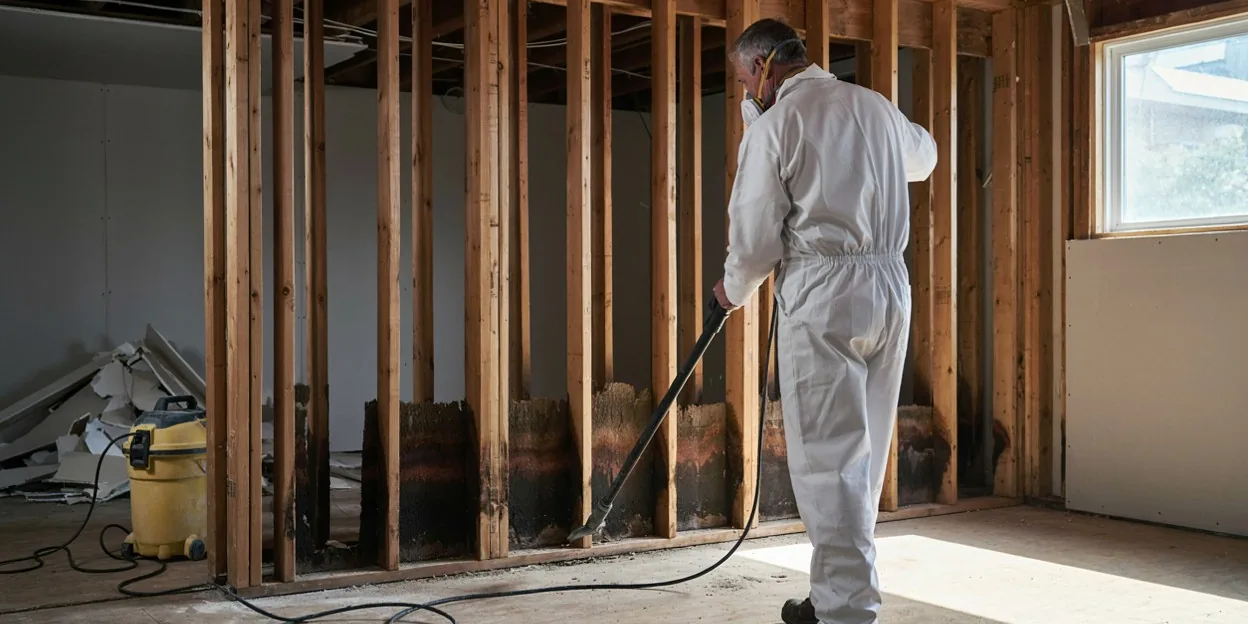
Growth on drywall after a slab leak, a water heater, or a washer line: room sealed, wet board cut to the meter mark, framing HEPA-cleaned and dried.
Black Mold Removal
A dark patch handled by how far the water traveled, not by its color: containment, porous material out, hard surfaces cleaned, leak fixed first.
Whole-Home Mold Remediation
A slab leak or a burst pipe that ran through several rooms, mapped wall by wall and cleared in zones as one planned project.
HVAC Mold Cleaning
Coil, drain pan, and condensate line cleaned or replaced when the attic air handler sweats through a 100-degree August.
Bathroom Mold Removal
Growth behind a vanity, under a shower pan, or on a ceiling with no fan, removed after the supply or drain leak is fixed.
Attic Mold Remediation
Growth on roof decking under hail-cracked shingles or around a sweating duct, cleaned and treated once the roof and insulation are handled.
Mold Odor Removal
A musty smell in a house that looks fine, traced to the wet pad under the floor or the cabinet back, then removed and treated.
Mold Damage Repair
Drywall, texture, baseboard, and cabinet bottoms put back after removal, once the slab reads dry and the leak is repaired.